From Digital Inclusion to Capital Inclusion
How allWomen.africa and CDEx are Building Africa's First Circular Cooperative Economy for Women
The launch of allWomen.africa by the Zimbabwe Women's Microfinance Bank (ZWMB) marks an important milestone in the evolution of women's economic empowerment in Zimbabwe. While many digital platforms focus on connecting entrepreneurs to markets, allWomen.africa goes a step further by creating the foundations for a new economic ecosystem designed specifically for women-led enterprises.
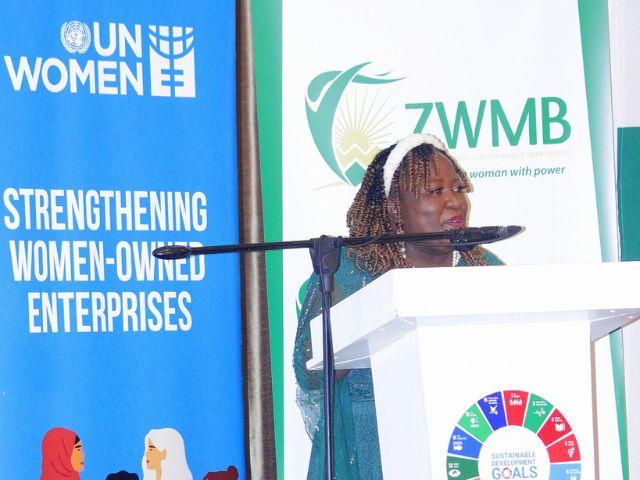
Supported by UN Women and developed through strategic partnerships involving Co-ops Africa and other stakeholders, the platform demonstrates what is possible when development institutions, financial institutions, government, and cooperative organisations work together towards a common objective: building sustainable economic opportunities for women.
However, the true significance of allWomen.africa lies not only in the digital tools it provides but in how it connects to a much larger vision—one that includes the Co-op Debenture Exchange (CDEx) and the creation of a circular cooperative economy owned and driven by women.
Beyond Market Access: Building Economic Ownership
Across Africa, women entrepreneurs have consistently demonstrated resilience, innovation, and business acumen. Yet many women-owned enterprises face a common challenge.
They can access customers.
They can access training.
They can sometimes access loans.
But they often struggle to access growth capital.
This is where the partnership between allWomen.africa and CDEx becomes transformative. The allWomen platform enables women entrepreneurs, MSMEs, savings groups, producer groups, and cooperatives to connect, trade, network, and transact digitally. At the same time, CDEx provides the capital market infrastructure required to mobilise investment into productive women-led cooperative enterprises. Together, these platforms address both sides of economic development: Access to markets. Access to capital. This combination creates the conditions necessary for sustainable business growth and wealth creation.
The Emergence of a Circular Cooperative Economy
Historically, many economic systems have extracted value from communities and transferred it elsewhere. The vision behind allWomen.africa and CDEx is fundamentally different. The objective is to create a circular cooperative economy in which women produce, trade, save, invest, borrow, and build wealth within interconnected cooperative networks. In this model: Women-owned businesses sell through allWomen.africa. Women save and transact through ZWMB. Women-led cooperatives raise capital through CDEx. Investors support cooperative enterprises through cooperative debentures. Returns generated by productive enterprises are reinvested into new women-led ventures. The result is an economic ecosystem where capital continuously circulates within communities rather than flowing away from them. This approach strengthens local enterprise development, promotes economic resilience, and accelerates wealth creation among women and their communities.
Why Institutional Support Matters
The launch of allWomen.africa attracted support from UN Women, government stakeholders, financial institutions, parliamentarians, and cooperative development partners. Such support is important because transformational economic change cannot be achieved by a single institution acting alone. UN Women has consistently championed initiatives that expand women's participation in the digital economy and improve access to economic opportunities. Across Zimbabwe and the wider region, partnerships involving UN Women continue to focus on digital inclusion, entrepreneurship, and women's economic empowerment. The support demonstrated during the launch reflects growing recognition that women are not simply beneficiaries of economic development programmes—they are drivers of economic growth. By supporting platforms such as allWomen.africa, institutions are investing in systems that allow women to participate fully in production, commerce, investment, and wealth creation.
From Entrepreneurs to Investors
One of the most exciting opportunities emerging from the allWomen-CDEx ecosystem is the potential to transform women from entrepreneurs into investors. Traditional financial systems often limit women to the role of borrowers. The cooperative capital market model expands that role. Through CDEx, women-led cooperatives can become issuers of investment instruments. Women can also become investors in cooperative enterprises that create jobs, generate income, and produce social impact. This represents a significant shift in economic empowerment. It is no longer only about providing access to finance. It is about providing access to ownership.
Building the Future of Women's Economic Empowerment
The future of economic empowerment will not be defined solely by access to loans or grants. It will be defined by access to digital platforms, access to markets, access to investment opportunities, and access to ownership of productive assets. The launch of allWomen.africa represents a critical step in this journey. Through its connection with CDEx and the broader cooperative movement, the platform is helping to build an ecosystem where women can trade, save, invest, and grow together. The support of institutions such as UN Women, ZWMB, Co-ops Africa, government agencies, and development partners demonstrates that this vision is gaining momentum.
As more women-led cooperatives join the ecosystem, Zimbabwe has the opportunity to become a continental leader in cooperative finance, digital inclusion, and women's economic empowerment.
The future is not simply digital.
The future is cooperative.
And through allWomen.africa and CDEx, that future is already being built.
Recent Posts
-
From strategy to national impact
15 Jun 2026
-
Building leaders before building capital
15 Jun 2026
-

A journey of persistence, cooperation and belief
15 Jun 2026
-
South African Cooperatives Embrace coops.africa
15 Jun 2026
-

-
CDEx Partners with DAMREV
14 Jun 2026
-

-